
Hip replacement (total hip replacement)
Minimally invasive via the Watson-Jones approach: the muscles are not cut but moved aside. The goal is to get you moving again quickly after surgery.
Home / Conditions / Hip
Conditions
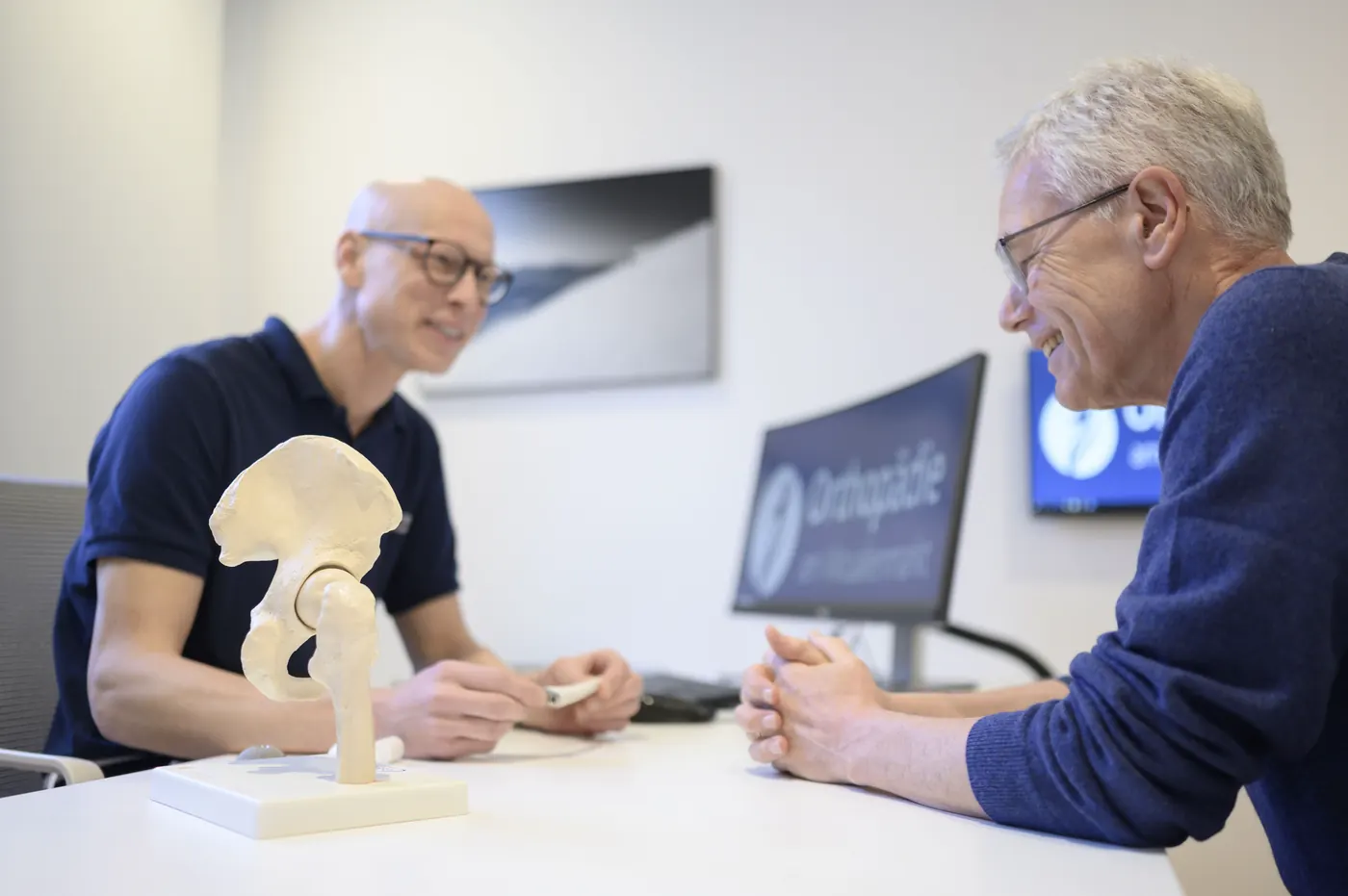
Hip pain often shows up in the groin or on the outside of the thigh. If the joint is worn, we implant a hip replacement using the minimally invasive, muscle-sparing Watson-Jones approach.
Surgery
Dr. Willers operates at Klinik Josephinum with an inpatient stay. Preliminary consultation, planning and aftercare are handled by our practice, so you always have the same contact person.
Minimally invasive via the Watson-Jones approach: the muscles are not cut but moved aside. The goal is to get you moving again quickly after surgery.
Diagnosis, informed consent and planning before surgery, check-ups and a rehabilitation plan afterwards, all at our practice.
Common causes
Wear of the hip joint, typically with groin pain and start-up pain. If treatment without surgery is no longer enough, a hip replacement becomes an option.
Pain in the groin can come from the joint, tendons or muscles. Examination and imaging reveal the cause.
Pain on the outside of the hip, often when lying on your side. Rest, physiotherapy and targeted injections usually help.
A variation in the shape of the femoral head or socket causes the joint to catch, often in young, active people.
Overloaded tendon attachments at the hip and pelvis, for example after running or intensive training.
At the first appointment, we listen and examine you thoroughly. If needed, we do ultrasound, X-ray and cone beam CT directly at the practice, so you receive the findings at the same appointment.
Without surgery
Not every complaint needs surgery. Targeted therapy, which we plan and supervise with you, often helps.
Talk
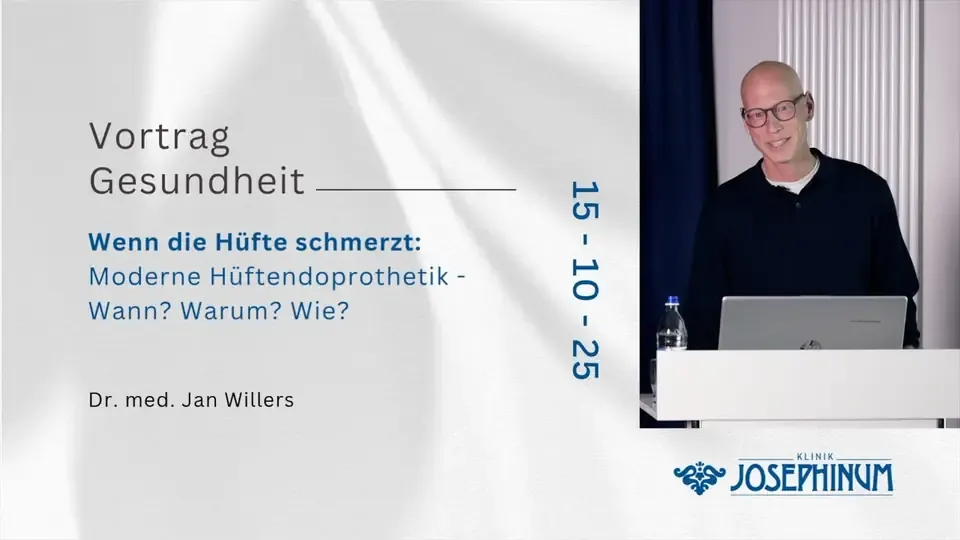
In his talk at Klinik Josephinum, Dr. Willers explains when an artificial hip joint makes sense, why it helps and how the operation works. The talk is in German.
The video is hosted on YouTube and only loads when you start it.
Frequently asked questions
With the Watson-Jones approach, the muscles are not cut but moved aside. The goal is to get you moving again quickly after surgery.
Dr. Willers operates at Klinik Josephinum in Munich with an inpatient stay. Preparation and aftercare are handled by our practice.
Usually you stand up with support on the day of surgery. You typically stay in the hospital for three to five days, followed by rehabilitation.
Other conditions
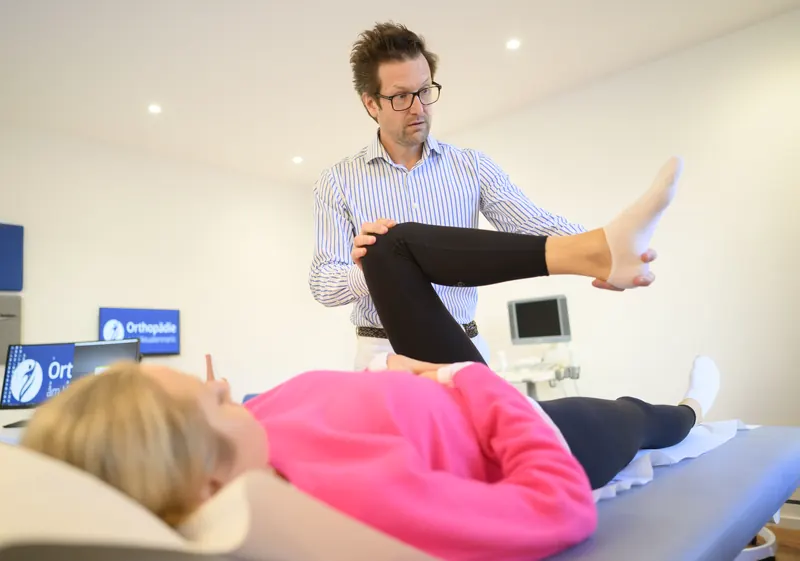
Pain when running, on the stairs or after twisting your knee in sports.
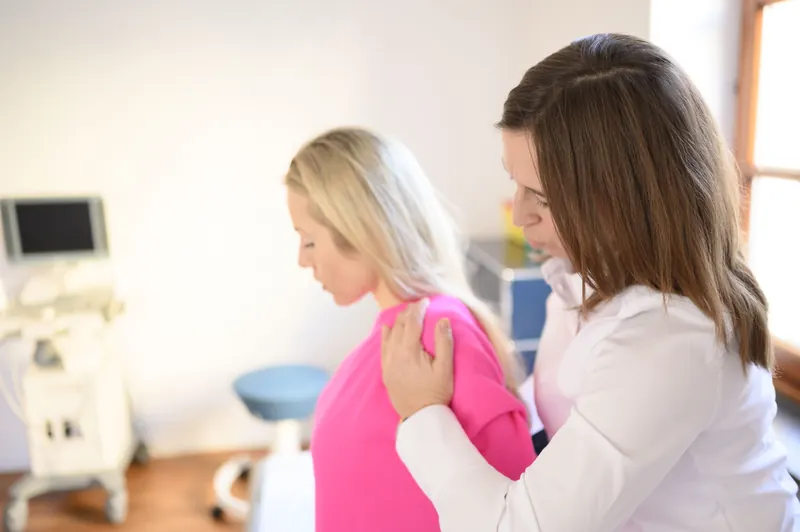
Pain when lifting your arm or at night when lying on your side.
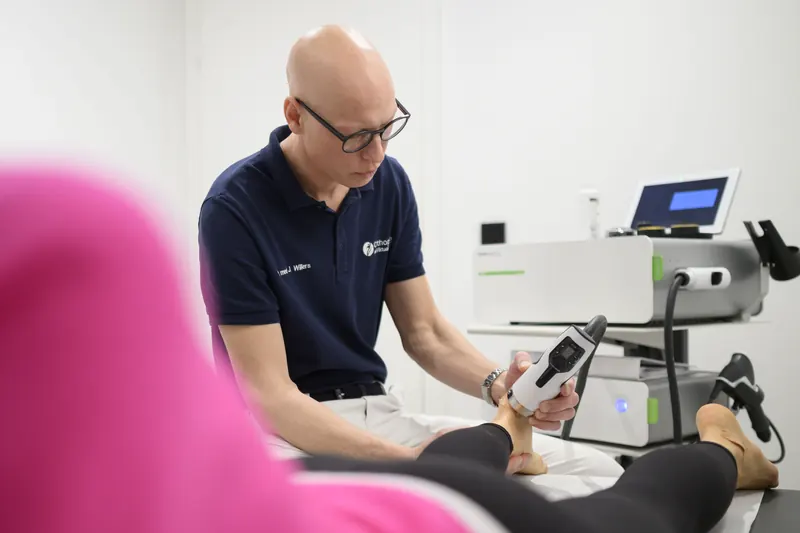
Pain in the heel, ankle or forefoot.
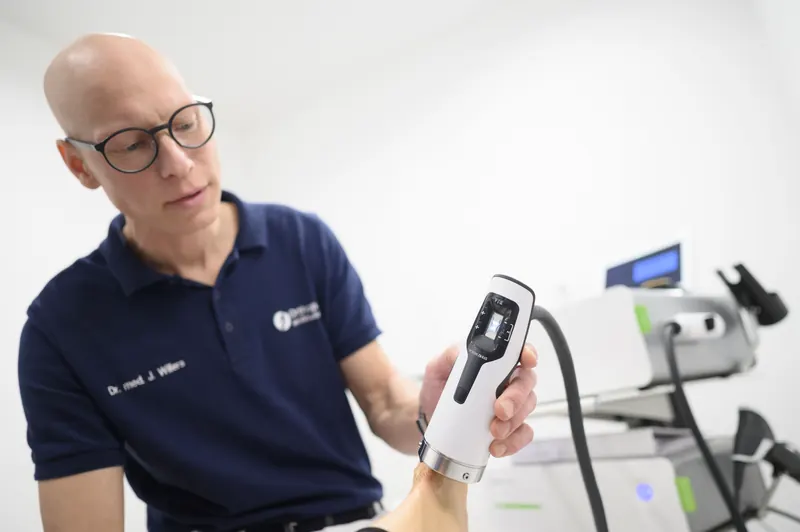
Pain when gripping, carrying or after training.
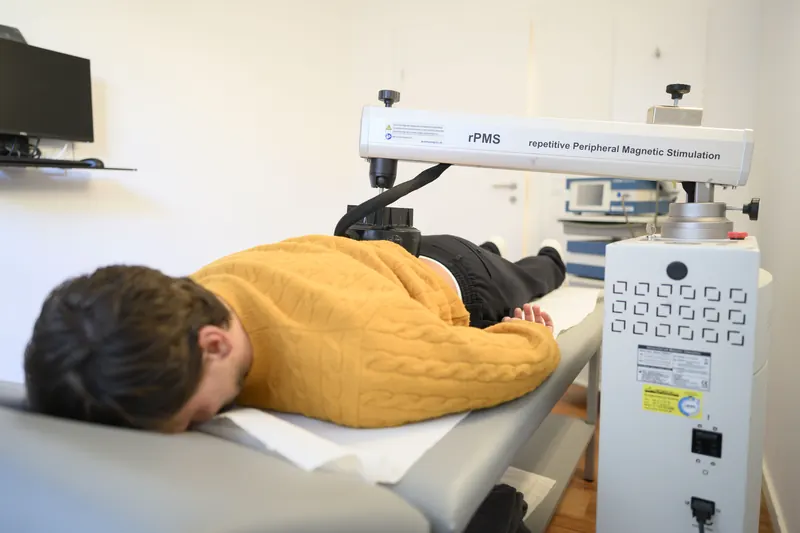
Muscle tension, lumbago or pain radiating into the leg.
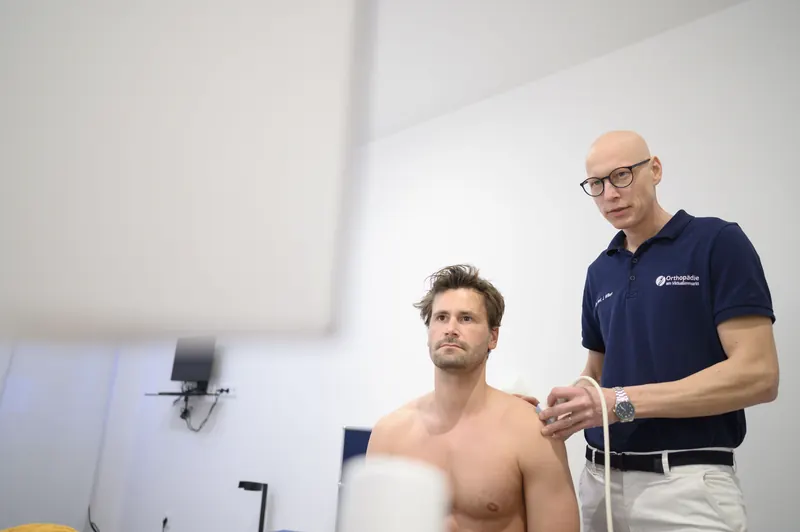
An acute injury in training or competition, or symptoms that do not go away.
| Monday | 8 am to 5 pm |
|---|---|
| Tuesday | 8 am to 6 pm |
| Wednesday | 8 am to 5 pm |
| Thursday | 8 am to 7 pm |
| Friday | 8 am to 1 pm |
| Weekend | closed |
Emergency outside opening hours: medical on-call service 116 117, in a life-threatening emergency 112